
The Commercial Crossover: What SHOT Show 2026 Revealed About the Future of Autonomous Systems
From our Investment Associate Max Quinlan-Ward’s perspective
Last month at SHOT Show 2026, I noticed a trend that’s been quietly building for years but is now impossible to ignore. Defence technology is crossing over into mainstream commercial markets. The pace of this shift has real implications for how we evaluate investments across the uncrewed platforms and their enabling technologies at Beaten Zone Venture Partners.
Scattered between the firearms displays were uncrewed systems providers, but they weren’t positioning themselves as “Defence tech.” Instead, they were pitching solutions for law enforcement, private security, and even hunting. These weren’t just drones. They were completely uncrewed systems. Platforms integrated with sensors, communications, and software developed for specific use cases.
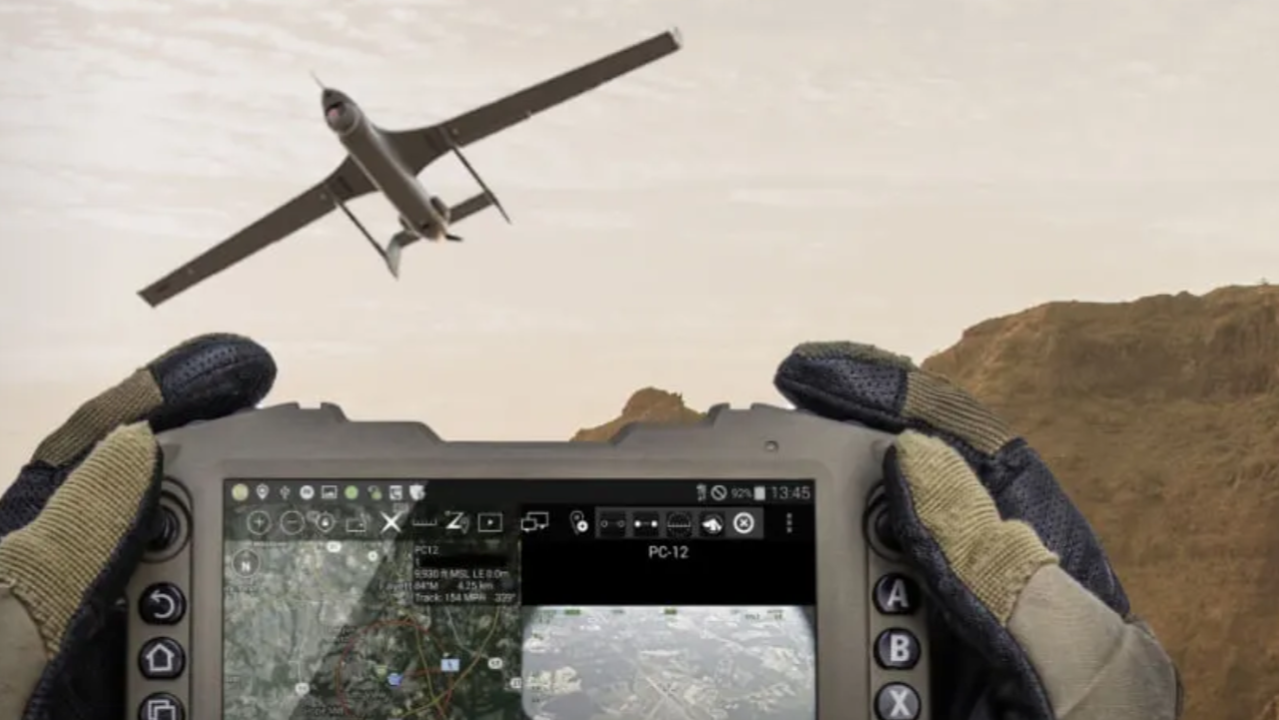
Three companies stood out. Drone Round showed a kinetic counter-UAS solution using three different-sized frangible bullets. Persistent Systems demonstrated modular uncrewed stacks, radio kits, controls, and sensors deployed across platforms from Boston Dynamics’ Spot to Teledyne FLIR quadcopters. Archon Vision displayed AI-powered thermal gimbals with edge compute, vehicle-mountable, designed for hunting, outdoor security, and ranch management. These weren’t prototypes. They were commercial products, and the buyers weren’t Defence contractors.
The technologies that have absorbed billions in defence R&D funding are becoming accessible to premium commercial segments. To put some numbers around it, the commercial drone market alone is already worth roughly US$30 billion and is on track to nearly double by 2030. Security robotics is a similar story, with a market size of around US$17 billion and growing at nearly 15% a year. A decade ago, these markets barely existed. That is a lot of new TAM that has nothing to do with defence budgets.
What makes this interesting from an investment perspective is that the buying motion in these commercial markets looks nothing like defence procurement. A cattle station in Queensland is comparing autonomous thermal monitoring against the cost of a helicopter and a stockman. A private security firm is conducting a cost-per-hour analysis for night shift guards. A pipeline operator is buying drone inspections through the same industrial channel they use for everything else and expects them to work within a quarter. No RFPs. No multi-year evaluations. Problem, budget, short list, ship. The competitive dynamics are closer to selling industrial SaaS than winning a Program of Record.
This creates both opportunity and a new competitive dynamic. Defence first companies with dual-use solutions will find themselves competing not just on capability, but on price, usability, and go-to-market fit. We are already seeing commercial native companies with consumer electronics or enterprise SaaS backgrounds moving into adjacencies that defence first startups assumed were theirs. The competitive moat for defence originated technology is narrower in commercial markets than many founders and investors appreciate.
Defence will continue to underwrite the hardest autonomy problems. Degraded communications, ruggedisation, low operator burden, adversarial environments. Those challenges are expensive to solve, and defence remains the most reliable sponsor for such deep R&D, but commercial markets operate under different rules. They don’t reward the most sophisticated solution. They reward products that hit a clear price point, work out of the box, are easy to use, and fit existing workflows and distribution channels.
There is a real gap between what defence buyers optimise for and what commercial buyers need. Defence procurement rewards capability edge, survivability in contested environments, and interoperability with existing military systems. Everything runs through compliance frameworks that can take years to navigate. Commercial buyers care about none of that. They want something that works out of the box, requires minimal training, fits their existing operating model, and makes sense from a total cost of ownership perspective. The companies that bridge this gap will unlock significant TAM expansion. Those who don’t will watch from the sidelines.
At Beaten Zone, this crossover shapes how we evaluate the autonomy stack. We look for companies solving hard defence problems where the underlying technology has a credible path to commercial pull. Not as a pivot, but as a TAM expansion lever. The teams that can maintain defence performance while building products with commercial usability and unit economics are the ones positioned to capture outsized value.
The autonomy market may be expanding faster than current defence budget forecasts suggest. Not because of new programs, but because commercial demand is now visible in mainstream U.S. markets. The question for investors is not whether defence tech will go commercial. It is which teams have the product discipline and go-to-market instinct to make that transition, and which will be overtaken by commercial-native competitors who never needed defence contracts to begin with.
Max Quinlan-Ward is an Investment Associate with Beaten Zone Venture Partners. The best way to get in touch or send something his way is to reach out via LinkedIn or pitch@beatenzone.vc
📷 via Persistent Systems