
In the War in the Pacific carrier based air power was vital. Battleships bypassed by new technology at scale. What role can drones play now? ⬇️
The contest for advantage in the Air domain will be critical across the Indo Pacific as the gap between the West and rest closes rapidly and quantity not just quality comes into play. Controlling the air enables freedom of action for maritime and land forces and provides a firm foundation for deterrence. But the cost and complexity to field exquisite carrier based air power greatly constrained the number of nations with this capability in recent times.
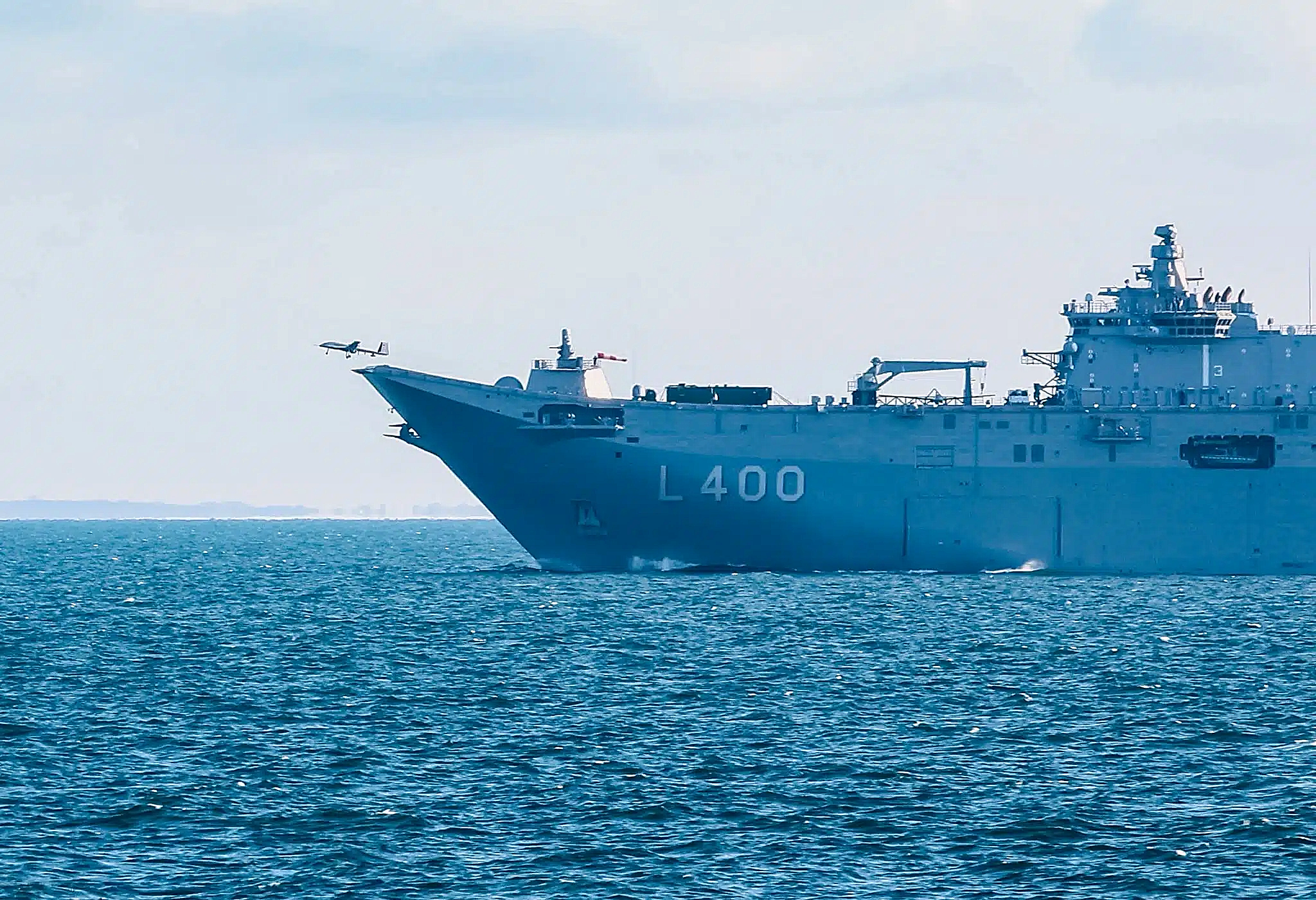
Now advances in drone technology may be disrupting the status quo. Naval News is reporting that NATO has seen the first involvement of Turkey’s new carrier based drone in a major Exercise. The Bayraktar TB3 is a Medium Altitude Long Endurance UAS that has been designed to operate from the TCG Anadoula Landing Helicopter Dock (LHD):
“The Turkish Navy has deployed one of its most capable task groups to the Baltic Sea for NATO’s Steadfast Dart 2026 exercise, conducting the first operational use of armed drones from a flat-deck ship in Alliance history. The deployment represents Türkiye’s largest naval presence in the Baltic region and demonstrates the fleet’s ability to project power across approximately 8,000 kilometres from its homeland.”
Interestingly the TCG Anadoula is derived from the Spanish Juan Carlos LHD, the same design used for Australia’s Canberra Class LHDs. The Spanish operate Harrier IIs and helicopters from their version, while the Turks are proving a carrier based large uncrewed aerial system is also an option.
The US Navy is also working with Boeing on the MQ-25 Stingray, a carrier-based unmanned aircraft that will initially be used for air to air refuelling. This beast of a drone is designed to be launched from carriers and while air tanker is the first mission, it is likely not to be the last. A short op-ed in the Naval Institute provides a good synopsis of the potential:
“Critically, the MQ-25 is going to assume additional mission roles. It is already conceived to take up intelligence, surveillance, and reconnaissance (ISR) and, quite likely, target acquisition tasks, given that both the Navy and the Marine Corps’ need a survivable platform for those missions.”
It sure would be a great sovereign capability to have an uncrewed platform able to launch from land and sea to enhance force projection and deterrence! Food for thought as always!
📷 via Naval News and articles mentioned are in the comments.