
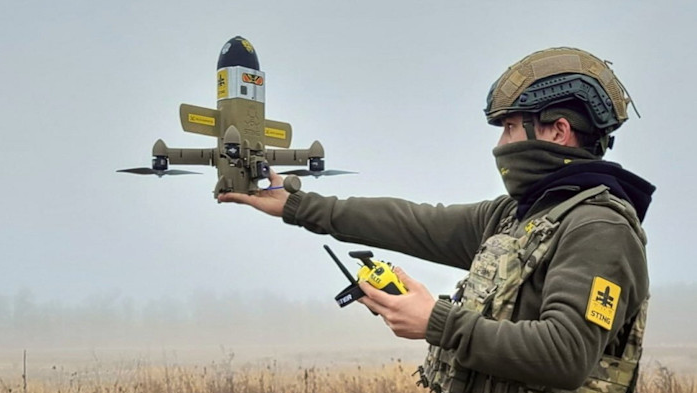
Intercepting drones and missiles comes at a cost. Brutal battlefield economics will bleed the defender dry unless we reduce the cost to kill. ⬇️
The air above the modern battlefield is increasingly becoming saturated with drones and missiles. The proliferation of precision allows even non state actors ability to send a deadly mix of drones, missiles, and decoys into the attack. Until recently, precision strike missiles were exclusive to the most modern militaries and reserved for high priority targets. Air and missile defence was likewise an exquisite capability with millions in missiles required to neutralise incoming attacks.
But as Ukraine and now the Middle East have shown, the economies of scale and low cost precision has allowed combatants to send hundreds of missiles and drones on a daily basis into the fray. Defending against scaled strike packages like this with high end interceptors is simply not sustainable. As Defense News reports:
“The math tells the story: A single Patriot interceptor costs over $3 million, a NASAMS round slightly over $1 million — and each Shahed costs Russia as little as $35,000 to manufacture, according to the Center for Strategic and International Studies. That puts Ukraine on the wrong side of an approximately 85-to-1 cost exchange every time it uses a Patriot to defend against a drone.”
The crucible of conflict has been driving innovation cycles and solutions such as simple as shot guns, next generation anti aircraft guns, directed energy weapons and interceptor drones. Ukraine in particular has become a leader in the design and deployment of interceptor drones – low cost, high speed drones designed to catch and kill Shaheds. Business Insider has a good short read on the challenge of finding effective and efficient solutions:
“Interceptor drone designs are now quickly evolving. The Sting, for example, carries a warhead that’s propelled up to 213 mph via four rotating blades. The sensor-guided interceptor, produced by Ukrainian drone maker Wild Hornets, resembles a handheld missile and is small enough to fit inside a duffel bag. Other interceptors look like small gliders.”
Success rates vary and depend heavily on the skill of the operator. There is also a heavy dependence on large scale sensors to identify the incoming drones and give the maximum interception window for interceptor drones to launch, track, catch and kill. This drone on drone warfare still involves humans in the loop on all sides… for now.
Plenty of food for thought – a reminder on how out of conflict militaries can fast be left behind if due focus is not being applied.
📷via Financial Times and articles mentioned are in the comments.