
The UK’s Defence Investment Plan has been released. A plan that may be the final act of an embattled Prime Minister is taking some bold decisions. ⬇️
After weeks of turmoil and the high profile resignation of the UK Defence Secretary John Healey, the UK government has announced £15bn increase in military expenditure to be funded by cuts to other government spending. This is half of what Defence chiefs had wanted to fund the force the UK Strategic Defence Review found was required given the geopolitical context and risks.
In stark contrast to the Australian Integrated Investment Program, it appears that the Royal Navy (RN) and the maritime domain is where some of the most drastic cuts will come to free up budget for bold new initiatives. A great read in Navy Lookout summarises the challenge the plan sets for the RN in particular, and the hard shift to a hybrid fleet this plan entails:
“The DIP falls short in many areas and the maritime capability has absorbed a disproportionate share of the trade-offs. Whether 2026 will be seen as a positive turning point or a disastrous misstep for the RN will very much hinge on whether the high-risk hybrid navy vision is achievable. Effectively, the RN is pinning much of its future surface combatant strategy on five new classes of vessel, four of them uncrewed, none of them yet designed, built or proven.”
The challenge for all Western navies seeking to recapitalise is that if the war drums start to beat, you fight with the fleet you have, not the one planned to arrive in a decade. Even when the nation is fully mobilised for the war effort, naval shipbuilding takes years to result in ships of size and capability of a Frigate or larger. Any fleet is likely to get smaller through combat losses before new ships commenced after combat are operational.
It remains to be seen whether the UK strategy is a deliberate or desperate – is this a a cogent strategy or is decision making ‘being driven by finances and not by lethality or effect’ as UK Naval commentator Tom Sharpe put it. Australian naval & maritime commentator Jen Parker spells out the risks involved with the UK doubling down on the hybrid fleet:
“What has been announced is still largely theoretical. They hope to have it operational in around 10 yrs, based on platforms, designs & capabilities that don’t yet exist. While Russia continues to press, harass & the prospect of conflict sits on the horizon. To me, this looks less like making the hard spending decisions and more like managing the Royal Navy’s decline. I genuinely hope I’m wrong.”
In the end, this plan puts the UK on a path to 2.7% GDP levels of Defence spending by 2030. This modest increase has come at a cost of a Defence Secretary, and arguably the final straw for Starmer’s time as Prime Minister. Increasing expenditure when your nation is used to collecting a peace dividend is proving very difficult.
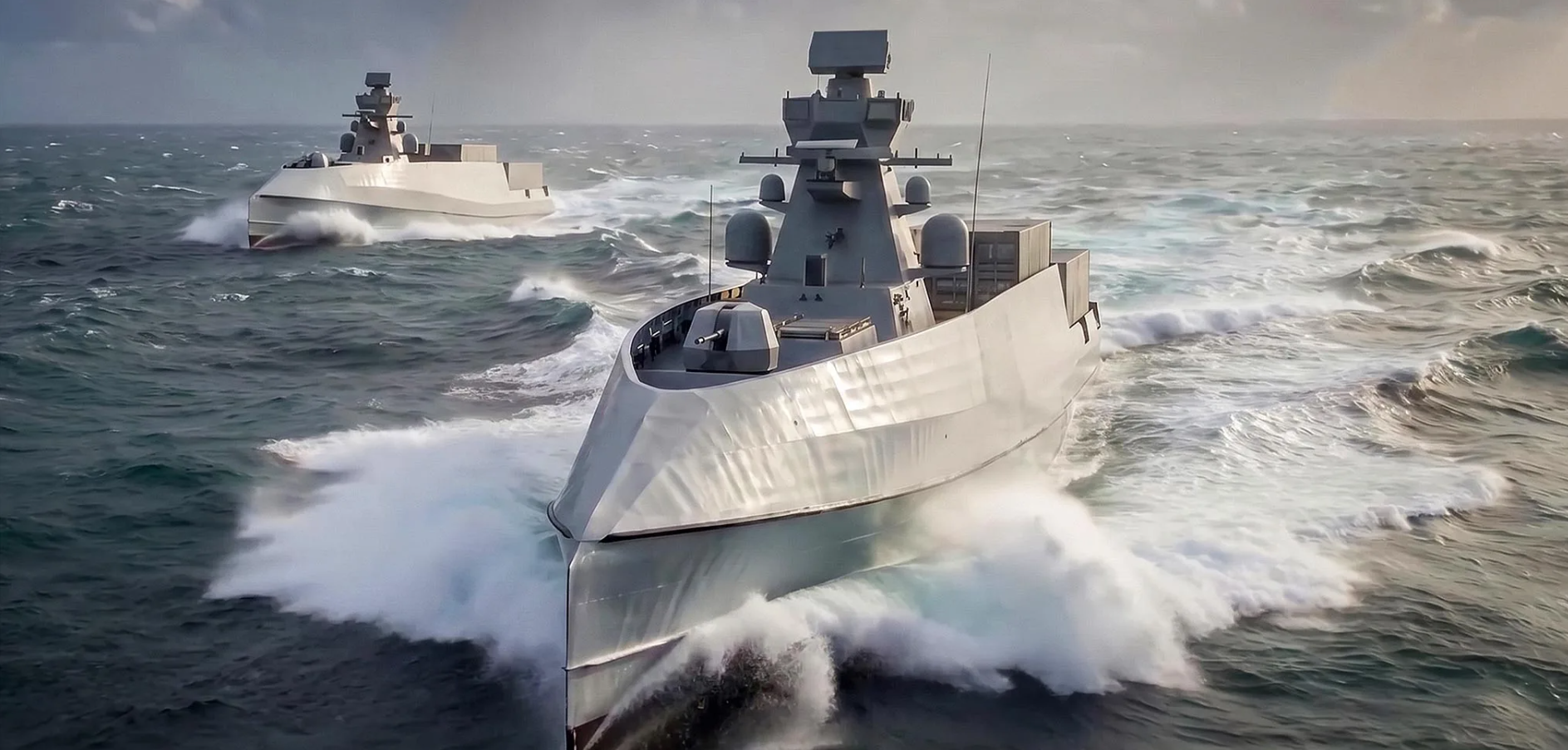
📷 concept image via Navy Lookout.