
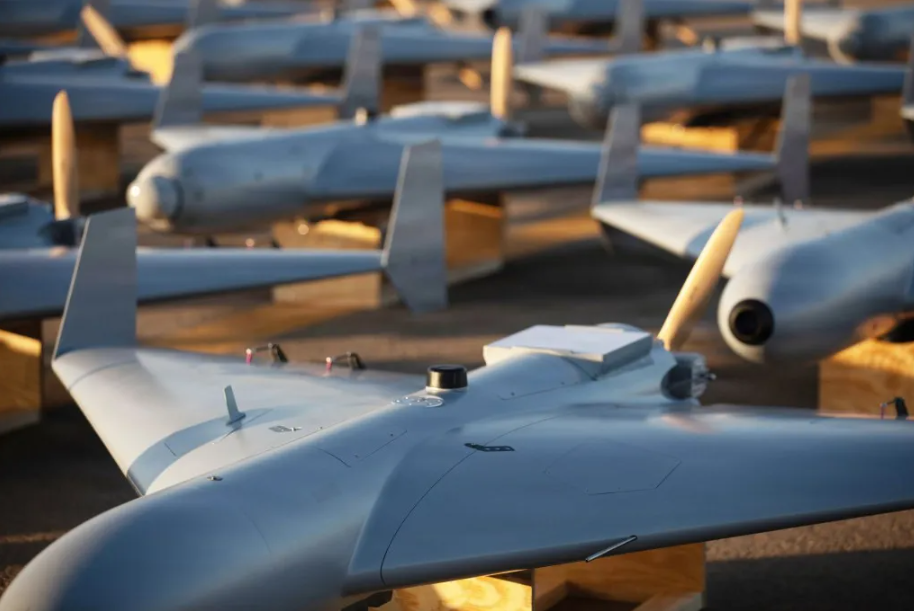
The triangle shaped attack drone has become synonymous with the struggle to control the skies. But it is no longer only in the arsenal of autocrats ⬇️
Russia learned lessons the hard way in its illegal invasion of Ukraine. Terrible tactics, stretched supply lines, wonder weapons failing to live up to the hype. But as history shows, large powers adjust and adapt in a long war. One of the key decisions Russia has made has been to heavily invest in first importing Iranian Shahed attack drones and then scaling up sovereign capability with the Gerarn – a Russified version.
As an article from The Guardian details, the Gerarn project was a deliberate decision by the Russians to concentrate efforts on weapons that delivered results and could scale:
“Russia has been asking itself: ‘What will be the T-34 of this war?’ said Jack Watling, a military expert with the Royal United Services Institute think tank, referring to the tank that is considered by some to have helped the Soviets defeat the Nazis in the second world war. Watling said the issue uppermost in the minds of Russian planners was: ‘What is the technology that we can invest in that is good and cheap enough and delivers decisive results?”
In an era of long and large scale war this relatively simple attack drone has proven to be highly effective, enabling scaled strike at a low cost. Russia continues to evolve and enhance the Gerarn and make sure you check out the comments to see an excellent HI Sutton infographic for further detail. But it is now not just the Russians leveraging this Iranian innovation to their advantage – the United States has done some reverse engineering.
The War Zone has an insightful article about SpektreWorks, a small US drone manufacturer that has reverse engineered the Shahed and developed a Low Cost Combat Attack System (LUCAS) – dubbed the FLM 136 that is now in the hands of the US Warfighter and undergoing testing in the Indo Pacific littoral. SpektreWorks is reporting a per unit cost currently at ~ USD $35k – and this is before significant economies of scale are leveraged with larger manufacturing runs and process engineering.
While slow progress has been made, there is no doubt that the Australian Defence Force needs to scale strike and build proficiency in fielding and fighting with unmanned systems. This is a capability that Australia could have in service and be manufacturing on shore. The sooner we harness local ingenuity and add to the options for the Arsenal of Democracy the better. High end HIMARS will be used for the highest value targets – what fills the fires gap in the Air Littoral and leverages lower cost?
Food for thought as always – articles mentioned are in the comments.
📷 via The War Zone