
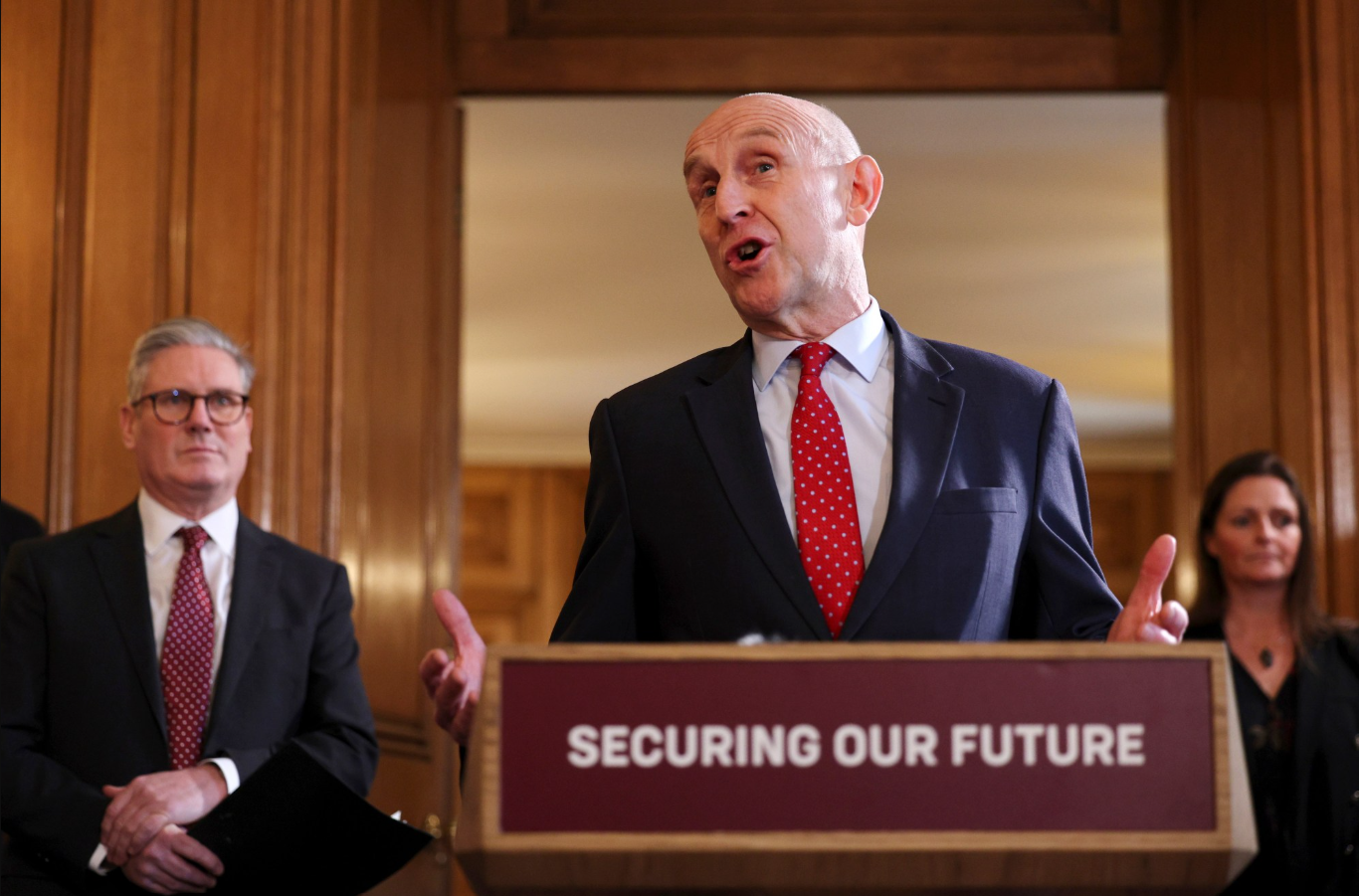
There are times when a stand must be made. Service before self. Not often that a politician will put their career on the line for principle. ⬇️
The most dangerous geopolitical circumstances since WWII. A military not fit for purpose after a generation of peace dividends. A recapitalisation plan struggling to fund the force in being while funding future initiatives such as AUKUS. A nation where the gap between rhetoric and revenue is clear.
But it is rare that a politician puts principle before position and resigns. The United Kingdom Defence Secretary John Healey has done so this week over his concerns that the level of funding for Defence is inadequate to meet the demands of the moment.
On taking office the Labor Government ordered a Strategic Defence Review (SDR) that it is now struggling to fund. Revenue forecasts are back end heavy and current levels of funding are forcing cuts and restrictions on the force in being. Healey in his resignation letter spells out what has happened:
“Since then, you have been unable, and the Treasury has been unwilling, to commit the resources the nation needs to defend the country at this time of rising threats. Since then, the demands on defence have increased still further, as have the UK commitments you have rightly made to allies.”
In addition to being Australia’s partner in the AUKUS class nuclear powered attack submarine, the United Kingdom is still one of Australia’s closest allies. Only New Zealand has a closer alignment in military culture, customs and traditions than the United Kingdom.
General Sir Richard Barrons – a co-author of the Strategic Defence Review – calls the lack of funding ‘a political choice’ and declares that the Defence Investment Plan (the UK’s IIP) needs to be fully funded to meet the threats the Government itself has identified:
“The SDR was clear that preparing for war in the 21st century is not simply about filling long-standing gaps in equipment, personnel or capability. It is about transformation: changing the way the UK thinks about, funds, organizes and delivers defence. Yet, a year after the SDR was agreed, the government has decided not to fully fund its own review. In doing so, it is not merely failing to move forward; it is actively going backwards.”
The UK currently plans to increase defence spending to 3% of GDP by 2030. Australia intends to reach this level by 2033. This is a salient reminder of the challenge of balancing spending on guns and butter in a society that has grown accustomed to the benefits of a peace dividend. As Barrons aptly put it:
“No one wants to spend more on defence for its own sake. But we are living in the world as it is, not the world as we would like it to be. We do not get to choose whether war matters. War can choose us, whether we prefer to ignore it or not.”
Food for thought as always, links to articles referred to are in the comments.
📷 via The Hill