
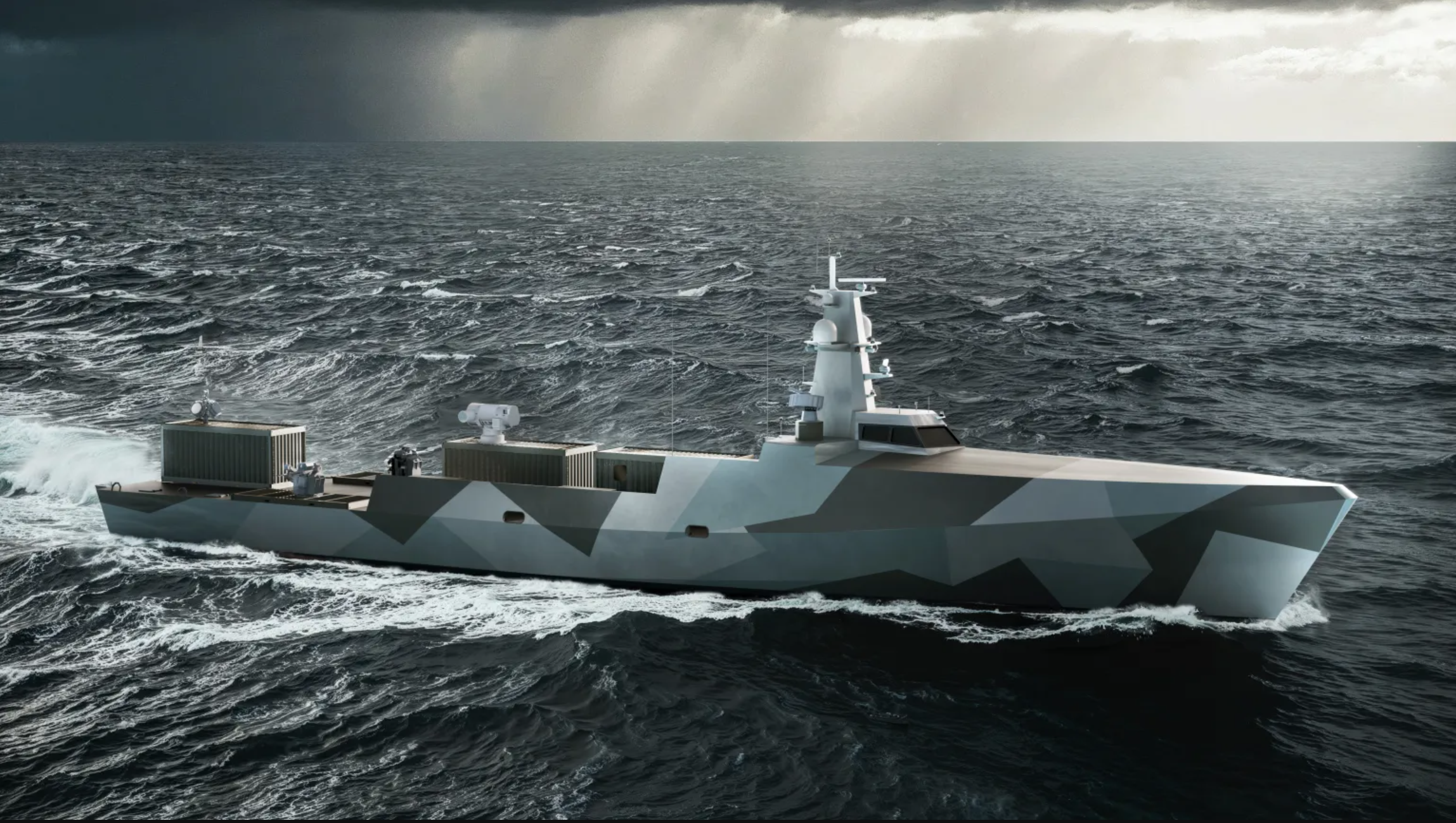
Could large uncrewed surface vessels be the next AUKUS opportunity — a way to increase combat mass and scale sustainably? ⬇️
Recently UK’s First Sea Lord delivered a compelling speech on the Royal Navy’s hybrid fleet strategy and the urgent need to adopt uncrewed systems to generate combat mass:
“This paradigm shift is not about replacing existing capabilities. It is about increasing the mass, survivability and lethality of our force. It is only through blending the conventional and the new that we will achieve this. At the same time, I am determined that we reduce the cost per unit to achieve the scale we need — because the reality is that there is no scenario in which we will have unlimited resources. We must end the mentality that what we need is ever more expensive and larger platforms.”
While Australian attention has recently focused on subsurface autonomous solutions like Anduril’s Ghost Shark and C2 Robotics’ Speartooth, significant innovation is also happening above the waterline. Australia’s Surface Fleet Review recommended acquiring six large optionally crewed surface vessels, each equipped with 32 vertical launch system (VLS) cells which is the same capacity as the planned General Purpose Frigate, the enhanced Mogami-class.
The US its own Modular Attack Surface Craft program, a recent reset of strategy that has shifted focus toward flexible, medium-sized vessels with containerised payloads. Like the UK, the goal is flexibility, faster build times, and the ability to scale shipbuilding capacity in ways that large crewed warships simply don’t allow. This is seeing neo-Primes and mil-tech start ups racing to develop solutions, not just legacy Primes and established players in the shipbuilding industry.
History shows just how hard it is to grow a naval fleet during conflict. Even with up to 35% of GDP devoted to defence, Australia didn’t commission its first frigate until over three years after the outbreak of World War II. Today’s complex naval vessels still take years and not months to build. If we rely solely on conventional shipbuilding, our fleet is more likely to contract through attrition than grow through production in the early years of a large-scale war.
Australian Defence Magazine just released a podcast with one of the Co-founders of Saronic Technologies, a US unicorn mil-tech start up that is pushing to develop uncrewed boats and ships with a mission to ‘redefine maritime superiority’. Well worth a listen to get a glimpse of how entrepreneurs are seeking to disrupt the way we seek to establish maritime mass and harness technology to close the manufacturing gap.
If any nation had an incentive to develop surface and subsurface autonomous solutions able to be built in months and at relative scale, it is this island nation of ours!
Links to the first Sea Lord’s speech and the latest Australian Defence Magazine podcast in the comments.
📷 Austal’s Vantage 55 UAS concep